
[Published] July 25, 2022
[Updated] August 27, 2026
The last devastating world war finally came to an end after the atomic bombings of Hiroshima and Nagasaki. But did we truly learn anything from that catastrophe? Did we reflect deeply enough on what had happened?
The answer is no.
Here in Japan, even more than eighty years after the war, we still encounter, almost every day, news reports that carry the dark shadows of that conflict, along with lingering resentment and hatred. This clearly shows that the aftermath of the war has never been fully resolved.
Beyond Japan, the wars and conflicts involving Russia and Ukraine, and the United States and Iran, among others, demonstrate that even today, well into the twenty-first century, many lives continue to be lost to war every day.
The resentment and unresolved grievances in the hearts of people in countries involved in these conflicts run deep. Unless we begin searching for ways to resolve them now, I fear that even half a century from today, the state of the world may remain fundamentally unchanged.
Beginning with Chaos
The universe is believed to have come into existence 13.8 billion years ago. Some 4.6 billion years ago, the Earth on which we live was formed. Eventually, human beings appeared, beginning the long journey that has brought us to a world of eight billion people today.
That was all there was. There were no instructions telling us what to do or how to live, no predetermined rules, and no standards by which anything could be judged beautiful or ugly.
Out of this chaos, the most basic wisdom necessary for survival gradually began to emerge. As human beings searched for food each day, cooperation developed, but so too did conflict and greed. Over time, we can imagine that concepts such as boundaries, family, groups, protection, society, and discrimination began to take shape.
Without even a concept of what it meant to live in peace, our ancestors gradually acquired various tools, methods, and ways of life through experience, learning, and ingenuity. Among them, surely, were plunder and violence.
Wisdom—and the misuse of wisdom—continued to advance, giving rise to increasingly complex concepts of “civilization,” such as national borders, nationality, and war. Today, we may well have reached the culmination of that process.
Sadly, as the tragedies of wars and conflicts continue to show us, cunning too often prevails over wisdom, and violence over dialogue. We therefore turn to institutions and systems such as the United Nations, international law, diplomacy, politics, and law enforcement in our search for solutions.
But such efforts may amount to little more than retracing the exact path we have taken in the name of “reflection,” searching for the point where the leak first began, and trying to stop it by applying yet another temporary patch.
It is like retracing our steps and picking up, one by one, the breadcrumbs we once dropped so that we would not lose our way—words, memories, knowledge, experiences, and definitions—brushing off the mold, and then forcing each one into a different place, as though it were a piece of a puzzle. But that will not prevent another leak from appearing. The puzzle itself is confined within the boundaries of our preconceived ideas.
We cannot truly solve the problem by continuing to depend on those mold-covered breadcrumbs. Instead, we should leave them behind, rise above the path we have traveled and look all the way back to where it first branched off. Then we should prepare fresh breadcrumbs—new ways of thinking, new values, a new vision, and a turning point in history—and use them as new guideposts while opening a new path forward.
Fortunately, we possess at least enough wisdom to recognize and record such turning points in history. We also know how to go back and examine even those mold-covered breadcrumbs—to reflect on the past—in our search for solutions.
So why not establish a forward-looking vision and redirect the course of history toward a new path—sdg0now: a world without war? We can move forward according to that new vision, kicking aside the mold-covered breadcrumbs scattered before us—the old assumptions and values that have sustained ideas such as war and invasion.
At that point, it is essential that those mold-covered breadcrumbs be left behind completely. If even a trace of the mold remains, humanity will continue to be governed by outdated assumptions and values that should have become relics of the past. We will remain haunted by the very breadcrumbs we thought we had kicked behind us—and risk condemning ourselves to repeat the tragedies of war and conflict again and again.
The Future of Our Children Is the Responsibility of Today’s Adults
Let us regard the state of mind of the international community immediately after the renunciation of war as the beginning of a new chapter in history—a new vision for humanity. Let us imagine a world without war, and then consider what we should do next and how we should go about it.
The tragedy of war is not limited to the loss of human life. Rebuilding towns, apartment buildings, schools, hospitals, and parks reduced to rubble by bombing—and providing beds where people can once again sleep in peace, warm meals, and clean water—requires an almost unimaginable amount of time and enormous financial resources.
And it is the children living today and the young people who will sustain tomorrow’s society—our children and grandchildren—who will ultimately have to bear this enormous burden.
If the monster we call “war” remains deeply rooted in the minds of our generation—the generation of parents—as an accepted idea, reinforced by heroic and glorified stories of the past, we will never be able to eliminate war as an option.
The negative legacies of the past may rightly be studied and reflected upon, but they must never become objects of admiration or reverence.
Even more troubling is the possibility that anger, resentment, and hatred toward people of former enemy nations are being engraved in the minds of children under the name of “history education.” If so, there is a grave danger that, even as generations change, these emotions will reappear in the form of retaliation, perpetuating the cycle of war.
Even if diplomatic efforts appear to be gradually improving the international situation, the truth is that we are still living by relying on the mold-covered breadcrumbs scattered along the old road of war.
I would like to ask the leaders of the world: How much longer do you intend to force young people to live under the shadow of war, fear, uncertainty, and hopelessness?
As promised by the United Nations Convention on the Rights of the Child, young people everywhere have the right to live freely and pursue their dreams.
The younger generation — the protagonists of the future — deserves a bright future filled with hope, freedom, and possibility.
Young people possess a sincere and passionate desire to contribute to the well-being and peace of humankind. In science, academics, sports, the arts, social welfare, entertainment, and every other field, they are eager to inspire one another, work together, and compete openly and fairly.
We must never forget that they are the “time-binders” who will continue to weave the grand history of humankind across the vast stage of the universe.
The future of humanity rests in their hands. We must entrust them with the great task of proving that human beings need not remain foolish forever.
We must never forget that they are the “time-binders” who will continue to weave the grand history of humankind across the vast stage of the universe.
Next ⇒ SDG0-3 | Live and Let Live
“We Are All Friends!”
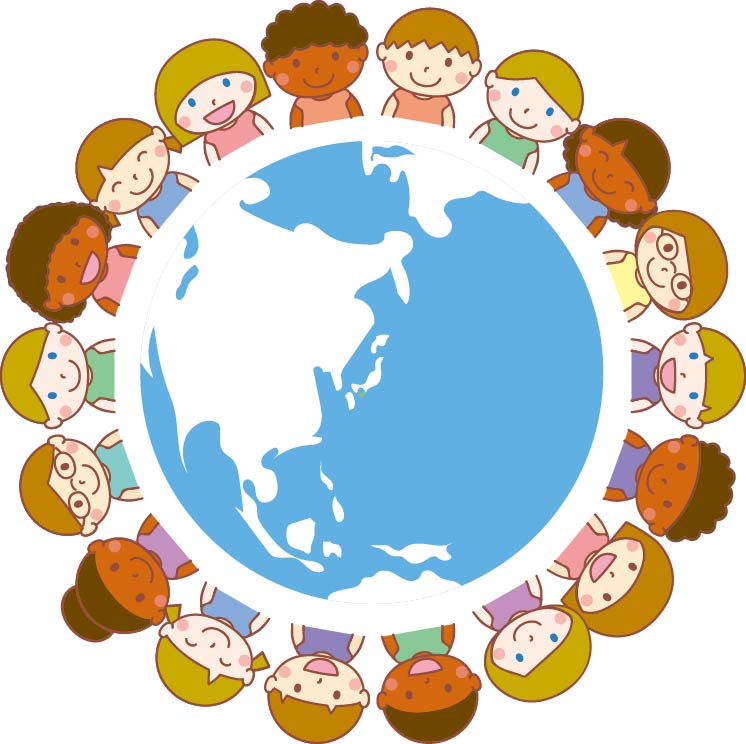
A Bright Future for Children Around the World!
コメント